Treat others the way THEY want to be treated
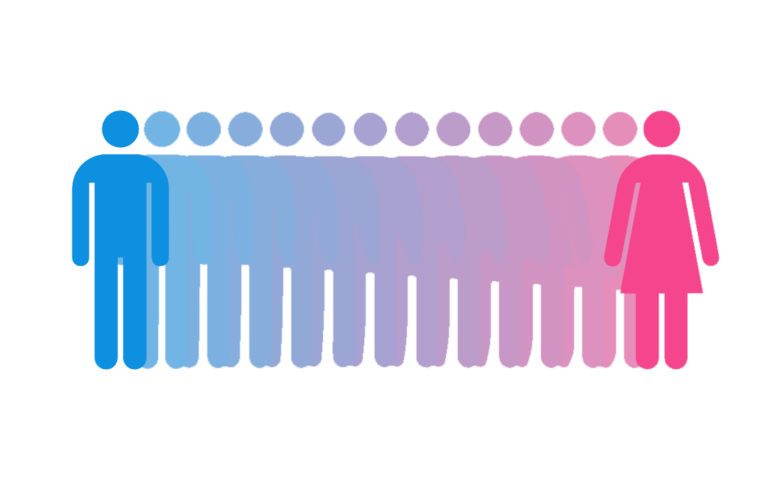
In the last few weeks, several parents have reached out for help and resources to help them navigate recent statements by their kids that they are non-binary. First, I love that the kids feel safe and supported enough to talk to their parents about this. And, secondly, I am glad to help with whatever resources and experience I have.
It also got me thinking about how ambiguities can throw us for a loop sometimes. Of course, we all have varying degrees of comfort with ambiguity. I thrive on it, and I have friends for whom it is extremely difficult. Both are perfectly fine ways of being in the world. And there are downsides and benefits to both ways.
In the example of non-binary folks that I started with, the only thing we need to remember is that our job is to believe the lived experience of people themselves and start from there. Do we need to fully understand that lived experience to extend respect? No, we don’t. Do we have to fully understand that lived experience to extend love? No, we don’t. Otherwise, the love is conditional.
Asking questions is a great place to start.
- “What are your pronouns?” This is hard for some folks to ask, but if we disentangle judgment or perceived judgment from the question itself, we can get the best information straight from the source. Note: this question is not, “what pronouns do you prefer?,” but “what ARE your pronouns?”
- Asking that question of everyone rather than just people whose gender identity is cloudy to us is one way to “normalize” the question. One way to do this is to introduce yourself and always include your pronouns. “Hi, my name is Patti and my pronouns are she/her.”
- Put your pronouns on your social media feeds after your name to further normalize offering pronouns. “Patti Digh she/her” is in my Twitter and Zoom profiles, for example.
- A useful followup statement to learning someone’s pronouns, particularly if they have changed, might be: “I will practice those pronouns (and/or name) until they become second nature for me. Until that time, I might get them wrong once in a while because of habit; please feel free to correct me if I don’t realize it and correct myself. I want to show you the respect you deserve.”
- Homework Assignment: research the difference between “gender identity” and “gender expression.”
Please understand that this is not about your belief system, your comfort or discomfort, or your level of understanding of gender expression and gender identity. It is about showing respect to other human beings in the way they will feel respected, not in the way YOU would feel respected. This is what we all want. This is an update of the “golden rule,” which urged us to treat others as WE would like to be treated.” This new “platinum rule” places the attention on the other person, a human being with their own needs and desires.
Here’s an easy way to remember this change in the direction of intention: If I followed the Golden Rule and got you a cup of coffee, I would bring you a black cup of coffee, because that’s the way I drink it. If I followed the Platinum Rule, I would ask you how you like your coffee and bring that kind of coffee to you. Which feels better?